Direction is not the whole estimate
Delta and Gamma explain much of the directional effect, but implied volatility can change the option value even when the stock move is exactly what you expected.
If IV rises, long options can benefit. If IV falls, long options can be hurt. That is why OptionsPeek lets you compare holding IV constant with using a target IV.
How Vega changes the result
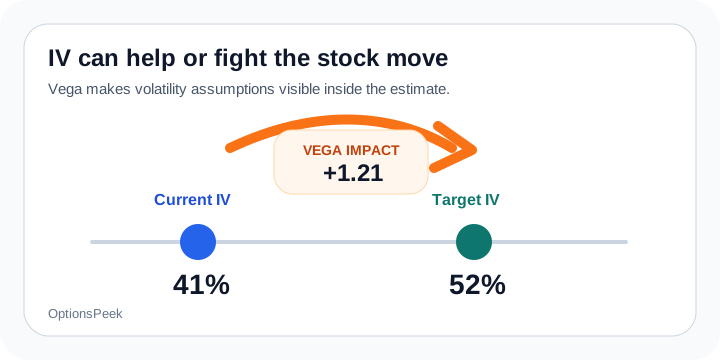
Vega measures how much the option changes when implied volatility changes. If your target IV is different from current IV, Vega becomes part of the estimate.
In the Greeks Breakdown, Vega helps separate volatility impact from Delta, Gamma, and Theta. That makes it easier to see whether the estimate is mostly stock movement or volatility repricing.
Explore IV alongside stock price and time
In the main calculator, enter the contract and current inputs, then choose Explore charts. On the dedicated exploration page, keep IV held constant for a baseline or switch to a target IV. Use the slider or type the value you want to test.
Keep stock price and elapsed days unchanged while inspecting the IV effect. Then adjust those assumptions if they are part of your question. All three controls update one shared chart, so you can see the effect in the same view.
The live preview uses the inputs already available. Choose Recalculate for a new submitted estimate and Save if you want to keep the setup. Neither action happens automatically when you move a slider.
When to be extra skeptical
Earnings, major news, macro events, and fast markets can move implied volatility sharply. In those moments, a simple estimate can still be useful, but it deserves more caution.
Use IV assumptions to ask better questions, not to create false certainty.