Model the direction clearly
For a call, an upside stock move usually helps the option estimate and a downside move usually hurts it. OptionsPeek makes that directional setup explicit by separating the stock move sign from the dollar or percent amount.
That makes quick scenarios easier to test: a stock up 5%, a stock up $10, or a stock down 3% can each be modeled without rewriting the whole contract.
Use Delta and Gamma together
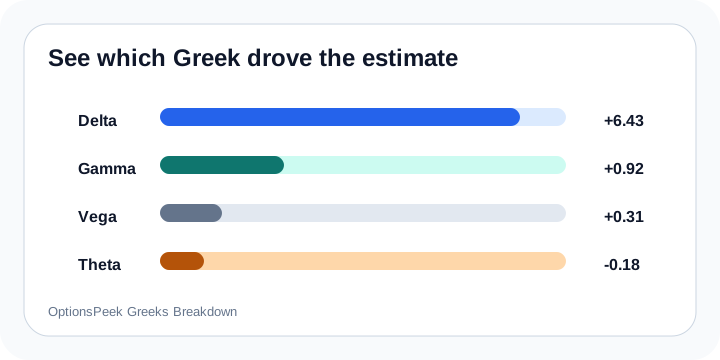
Delta gives the first directional push, but Gamma can matter when the move is large or the option is near the money. That is why the Greeks Breakdown is useful after the estimate loads.
If Gamma is adding a meaningful amount, the call is reacting more dynamically than a simple Delta-only estimate would suggest.
Check IV and time decay
A call can be directionally right and still be affected by implied-volatility changes or time decay. Current IV, target IV, Vega, Theta, and scenario days all help explain that part of the estimate.
For earnings, news, or premarket gap scenarios, the cleanest workflow is to calculate once with current assumptions, then rerun with a lower or higher target IV to see how much the estimate depends on volatility.