Why breakeven belongs next to the estimate
A contract can show an attractive estimated option price and still be a poor trade if the premium, position size, and breakeven do not fit your risk plan.
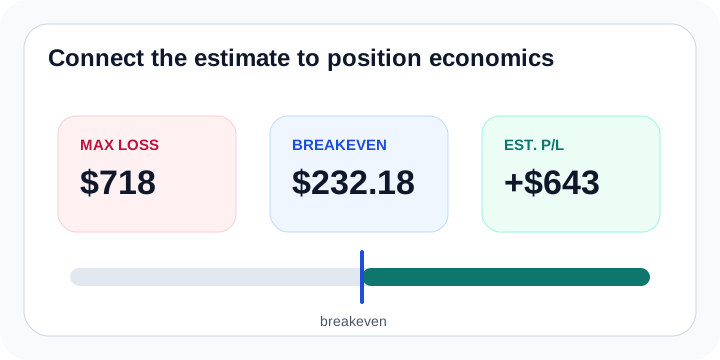
The Profit / Breakeven view helps connect the estimate to a simpler question: if the stock reaches this target on the scenario date, what might the option position be worth?
OptionsPeek now also exposes that workflow as an expanded profit/loss calculator page, while still using the same scenario fields as the main scenario page.
What OptionsPeek calculates
OptionsPeek uses the current entry option price, contract count, strike, side, target stock price, scenario timing, IV assumptions, and the same estimation method as the main page to calculate estimated position value and P/L on the scenario date.
For calls, expiration breakeven is strike plus entry option price. For puts, expiration breakeven is strike minus entry option price. Expiration POP uses that same premium-adjusted breakeven. The view assumes standard listed option contract sizing, where one contract usually controls 100 shares.
Scenario value is not expiration payoff
Before expiration, an option can still have substantial time value. OptionsPeek therefore uses the scenario option-price estimate for a pre-expiration target and uses intrinsic value only when the selected horizon reaches expiration.
This remains an educational model rather than a live executable quote. Actual option prices can differ because implied volatility, bid/ask spread, liquidity, rates, dividends, and market conditions still matter. Use the expanded Profit / Breakeven page alongside the Estimate Summary, Greeks Breakdown, and stock price chart.