Delta is the first directional term
Delta estimates how much the option may change for the first part of the stock move. Calls usually have positive Delta and puts usually have negative Delta, so direction matters.
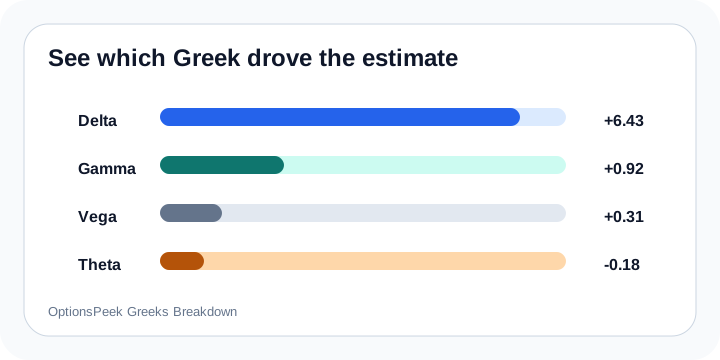
In OptionsPeek, Delta is part of the estimate summary, but the Greeks Breakdown is where you can see how much it contributed relative to the other terms.
Gamma changes the shape of the move
Gamma matters when the stock move is large enough that Delta itself changes across the scenario. Near-the-money options and close expirations can make Gamma more visible.
That is why a simple Delta-only shortcut can miss important context. A visible Gamma contribution tells you the estimate is not moving in a straight line.
Vega and Theta add the real-world friction
Vega reflects how implied volatility changes may affect the option estimate. Theta reflects time decay over the scenario horizon. Together, they explain why direction is not the only force in the result.
When the Greeks Breakdown shows these terms clearly, the estimate becomes easier to inspect, adjust, and rerun with different assumptions.