Why IV belongs in a scenario tool
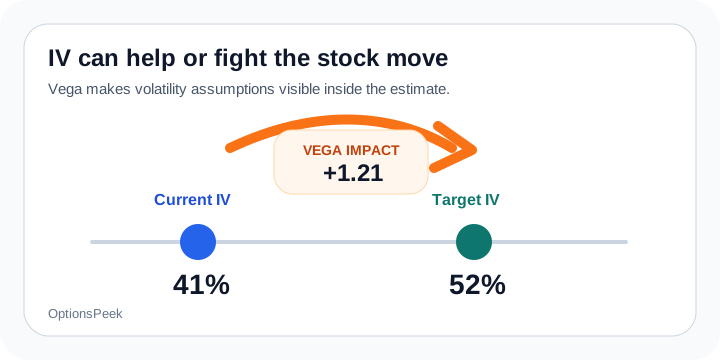
A stock move alone is not always enough. If implied volatility also expands or contracts, the option can move more or less than Delta by itself would suggest. That is why OptionsPeek includes both current IV and target IV assumptions.
The point is not to turn every user into a volatility specialist. The point is to give a realistic way to ask, what if the stock moves and volatility changes at the same time?
How to think about it simply
Current IV describes where volatility is now. Target IV lets you model where it might be after the move. Vega tells you how sensitive the option is to that change. Together, they let you estimate whether volatility is helping or fighting the stock move.
This is one of the areas where scenario planning is more useful than a single static quote.
How OptionsPeek makes IV visible
The cleanest way to see IV is to compare the same stock move with IV held constant and then with a target IV. When the second estimate changes, Vega is the reason. The Greeks Breakdown helps separate that effect from Delta, Gamma, and Theta.
The key idea is simple: when volatility changes, the option estimate can change even if the stock move is exactly the same.